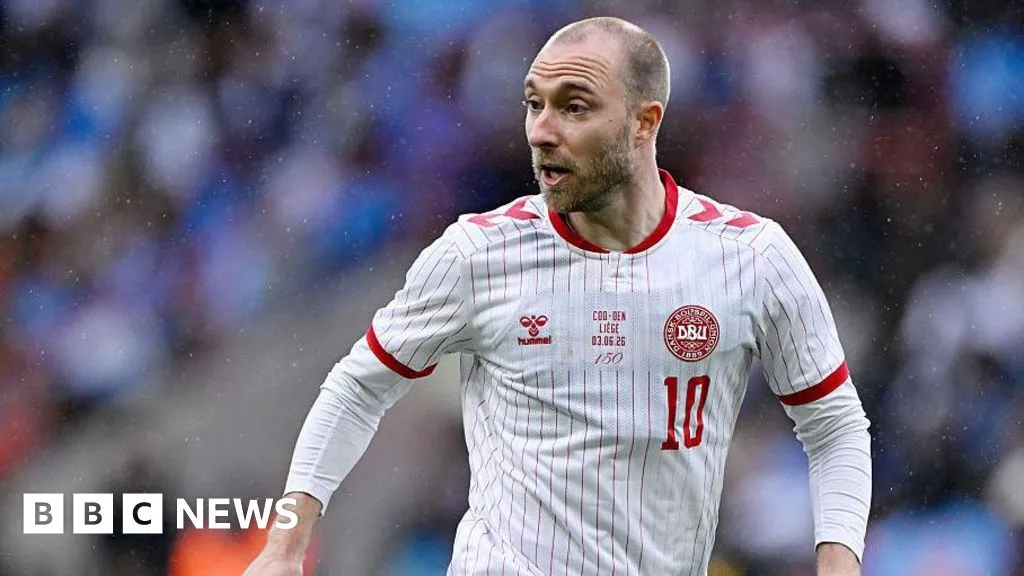
Footballer Christian Eriksen demonstrated the critical role of medical technology in sports when his heart device, an Implantable Cardioverter Defibrillator (ICD), activated promptly during a recent international match, potentially saving his life.
Eriksen, who had previously suffered a cardiac arrest in 2021, collapsed on the pitch in a match against Ukraine this past Sunday. Remarkably, he was able to walk off the field after regaining consciousness, thanks in large part to the ICD implanted in his chest. Following the incident, Eriksen shared on social media, "My ICD did exactly what it was designed to do: protect me when I needed it most."
How Does an ICD Function?
The ICD is a compact, life-saving device that monitors heart rhythms and delivers electrical shocks to correct any dangerous irregularities. Though classified as a treatment rather than a cure, the device’s prompt response can be crucial in emergencies.
Two primary types of ICDs exist: one embedded beneath the skin, typically near the armpit, acting like a mini-defibrillator, and another directly connected to the heart, functioning similarly to a pacemaker. In Eriksen’s case, the ICD likely delivered a swift electric shock upon detecting an aberrant heart rhythm, effectively resetting it to normal.
Professor Aneil Malhotra, a sports cardiologist at Manchester Metropolitan University, describes the sensation of an ICD shock: "It feels like being thumped in the chest." He compares the action of resetting the heart to rebooting a computer, emphasizing that these devices are proven to be highly effective.
Less than five years prior, during a match in the European Championships, Eriksen experienced a catastrophic cardiac arrest that left him unconscious on the field. On that occasion, immediate interventions from teammates were vital, including CPR and the use of a portable defibrillator. Experts assert that those life-saving measures at the time were pivotal.
This time, however, the defibrillator was already within him, having been implanted shortly after his previous cardiac incident. As a result, Eriksen benefited from an immediate safety net that aided his swifter recovery. "Because he had the ICD in place, he didn’t have to wait," explains Professor Malhotra.
Understanding Cardiac Arrests
A cardiac arrest differs from a heart attack, often stemming from irregularities in the heart's electrical impulses. Numerous factors contribute, including genetic conditions or infection-related damage to the heart. While rare, unexplained cases can also occur, with underlying causes remaining undiagnosed. Although heart problems in young athletes are unusual, they are not unprecedented.
Eriksen's first collapse brought to mind previous incidents in professional football history, notably the cases of Fabrice Muamba and Marc-Vivien Foé. Muamba was forced to retire at just 24, while others, like Daley Blind, have successfully returned to competitive play post-diagnosis of heart conditions.
Tragically, the dangers of cardiac events extend beyond professional sports. In the UK, sudden cardiac arrests result in approximately 12 deaths weekly among individuals under 35, according to the charity Cardiac Risk in the Young (CRY). "This second, sudden collapse of Eriksen is a testament to the potentially life-threatening impact of cardiac conditions that many young people face daily," remarks CRY CEO Dr. Steve Cox.
As Eriksen continues his recovery surrounded by family, his experience serves as a stark reminder of the vital role that prompt medical interventions and advanced technology play in saving lives, particularly in high-stakes environments like professional sports.
Source: BBC News
Source: BBC News - Health