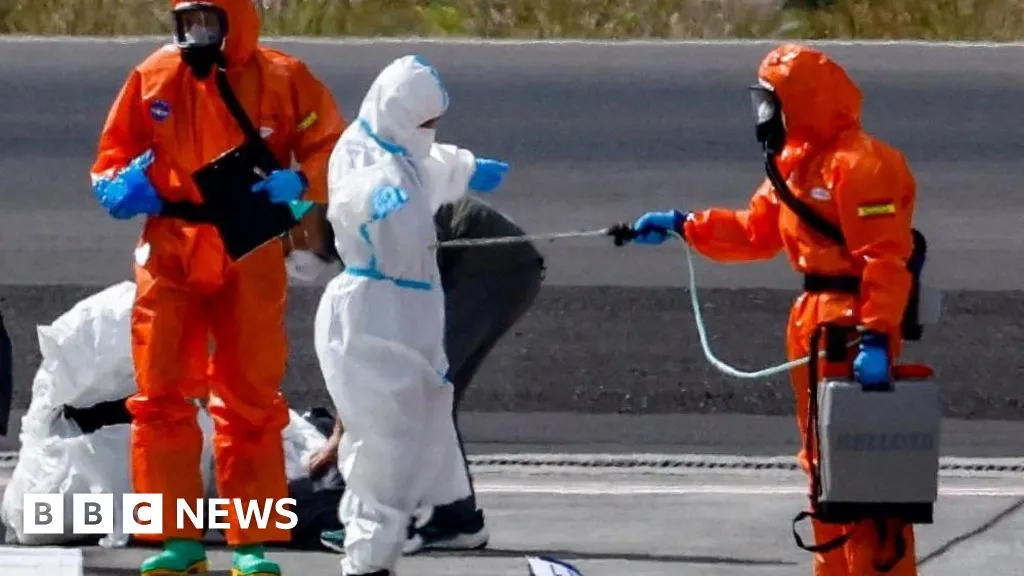
Passengers evacuated from the cruise ship MV Hondius, where a hantavirus outbreak claimed three lives, are now on a path to isolation, raising questions about public health risks. Health officials are working diligently to allay fears as they monitor the situation closely and track potential contacts.
All evacuees are being returned to their home countries for future medical evaluation, while the World Health Organization (WHO) reassures the public that the chance of a widespread outbreak remains minimal. Dr. Tedros Adhanom Ghebreyesus, the WHO’s Director-General, emphasized, "We are seeing no signs of a broader hantavirus outbreak following the repatriation of the final passengers from MV Hondius."
Out of the confirmed cases among those aboard the ship, two were directly linked to the virus, raising concerns about human-to-human transmission within confined spaces. Dr. Maria Van Kerkhove, an epidemiologist at WHO, clarified, "This is not Covid, this is not influenza. The Andes strain involved here transmits in a markedly different manner, making it less infectious in general public settings." Experts further confirmed that hantavirus transmission typically occurs via exposure to rodent droppings, urine, or saliva, starkly contrasting how highly contagious viruses like measles spread.
The chain of events leading to the outbreak is still under exploration. Passengers visiting remote wildlife areas could have encountered infected rodents prior to boarding. Nevertheless, experts are coordinating extensive contact tracing alongside isolation measures to contain any possible spillover effects. Currently, nine confirmed cases have been reported from among the passengers and crew of the cruise.
The tragic fatalities included a Dutch woman who traveled aboard MV Hondius and was later determined to be infected. She had shared a cabin with her husband, who died earlier while still aboard, leaving health officials scrambling to ascertain the specifics of their cases. The UK's Health Security Agency maintains that the risk of hantavirus from routine social interactions is negligible, particularly in public venues.
As precautionary measures, 20 British nationals evacuated from Tenerife are now housed at Arrowe Park Hospital for close monitoring and will later continue isolation for a total of 42 days. Officials stress that all evacuees are presently asymptomatic. While there is an ongoing vigilance in the tracking of this virus's potential spread, the sentiment remains that the general public's exposure risk is quite low.
In other aspects of the response, a French passenger showing symptoms of the virus is currently being treated in Paris. As contact tracing efforts unfold, health authorities remain on high alert. The situation is fluid and health officials are poised to adapt their public health strategies as new data emerges.
As the global health community continues to navigate this incident, immediate responses reflect a commitment to public safety, showcasing that though the hantavirus poses certain risks, well-coordinated health measures are key to minimizing wider community threats.
Source: BBC News
Source: BBC News - Health