The struggle for patients to secure vital medications in England has reached a critical juncture, leaving many in distress as they navigate an increasingly complex healthcare landscape. From epilepsy to Parkinson's disease, individuals relying on essential drugs are facing unprecedented barriers to access at a time when their health depends on consistency.
Chloe Hayward, a 29-year-old epilepsy sufferer, poignantly described her experiences: "It’s just terrifying. I get panic attacks. In the last few weeks, I haven't been able to get the right medications, and my seizures came back. I fell and hit my head and now have a big scar across my back from it.”
Chloe is just one of many who have found their lives disrupted due to the acute shortages of critical medications. People living with chronic conditions, including heart disease, stroke risks, and bipolar disorder, are now encountering severe difficulties in obtaining the medications that allow them to lead stable lives. Reports indicate that pharmacies across the country are struggling to meet demand, often leaving patients to leave empty-handed.
At the heart of this crisis lie rising global drug prices and a convoluted funding mechanism of the NHS. Under the current system, pharmacies are reimbursed a fixed price for each medication they dispense. When the cost of a drug surges due to various market pressures, such as increased transportation and manufacturing costs, these medications may be placed on a government price concessions list. As of April 2026, this list saw a record 210 medications included.
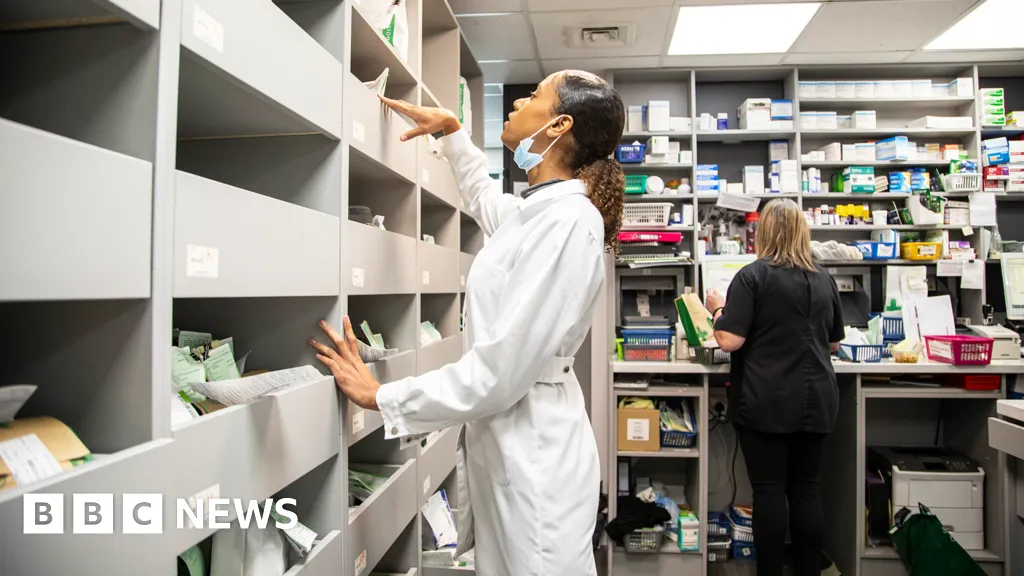
This reimbursement structure results in significant financial strain for pharmacies. When market prices exceed the concession rate, pharmacists often face substantial losses, curtailing their ability to stock enough medicine to meet patient needs. Akash Patel, a pharmacist in Shepperton, Surrey, shared that he often has to provide incomplete prescriptions, which risks patient health while also eroding his business’s viability. "It's been getting worse in the last few years, but now is the worst I've ever known it," he lamented.
For patients like Chris Henry, 49, managing Parkinson's disease, the situation is equally distressing. Chris relies on Co Carbidopa to control his symptoms. "This is genuinely concerning," he expressed, highlighting the anxiety that surrounds the uncertainty of medication availability. The prospect of running out of his essential drugs looms heavily over him as he balances work and family responsibilities.
As pharmacists balance financial challenges and the health of their patients, many report spending considerable time trying to source needed medications, often described as "going on patrol". The anxiety and logistical difficulties associated with obtaining prescriptions drive some patients into a continuous cycle of stress and uncertainty, raising alarmingly loud calls for reform.
With over 1,500 pharmacies shuttered since 2017—and 27 closures reported this year alone— the availability of pharmacies has plummeted to a 20-year low. As medicine prices continue to escalate, the NHS’s ability to ensure stable access to medications for vulnerable populations appears increasingly jeopardized.
In light of these challenges, experts and advocates are urging for immediate policy reform to address the systemic issues contributing to this healthcare crisis. Without a decisive intervention, patients across England may continue to face daunting hurdles in accessing the medications they desperately need.
Source: BBC News - Health