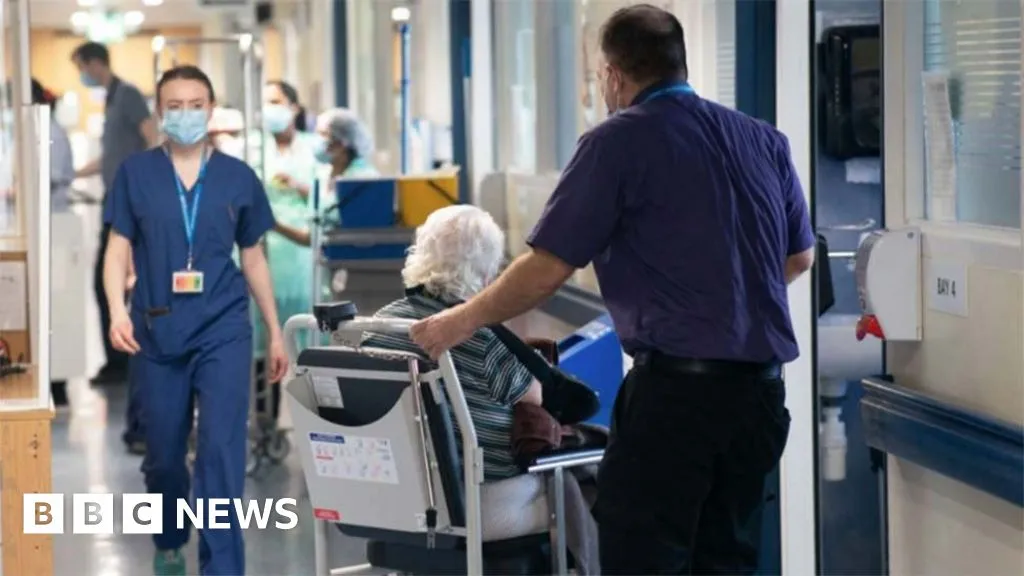
Nearly 3,000 patients are subjected to corridor care every single day in England, a shocking statistic that underscores the rising crisis within the National Health Service (NHS). Recent data reveals that thousands are being treated in makeshift areas, often in hallways or even outdoor car parks, raising alarms about patient safety and dignity.
Unprecedented Numbers of Corridor Care
For the first time, comprehensive statistics have been released, showcasing the magnitude of this issue, which has been denounced by government officials as "unsafe" and "unacceptable." The data indicates that during May, an average of 2,241 patients endured corridor care in Accident and Emergency (A&E) units while an additional 669 received treatment in areas adjacent to wards without proper beds.
These staggering numbers represent approximately 3-4% of the daily admissions via A&E, with a significant concentration of corridor care incidents occurring at just 20 NHS trusts, which alone accounted for over half of the total cases in emergency settings and two-thirds across all hospital wards.
Personal Accounts Highlight the Reality
Patients and their families have begun to share harrowing testimonials about their experiences. One woman, Suzanne, recounted her distressing visits to the East Midlands A&E, where her elderly mother endured a bleak 24-hour wait on a trolley amidst a sea of other patients. "If we hadn’t been there, I dread to think what might have happened," she lamented, highlighting the critical role that family support played amidst inadequate care conditions.
Kathy, another patient, described waiting 36 hours alone in a chair for a diagnosis that ultimately revealed a brain tumor. "It was horrendous… I got home and threw up. I was exhausted and broken," she reflected, underscoring the emotional toll of such experiences.
Healthcare Workers Despair
The plight of patients is mirrored by the overwhelming stress faced by healthcare workers. Nurses, who requested anonymity, have described a working environment rife with burnout and untenable conditions. One recalled a particularly devastating shift where a patient suffered a cardiac arrest in plain view of other frail individuals waiting for care. "There’s no dignity in that," the nurse remarked, capturing the grim atmosphere pervading many NHS facilities.
Another nurse painted a bleak picture of an emergency department that felt "like a war zone," where a deceased patient's body lay unnoticed for an extended period. The implications of such an environment are profound, provoking serious questions about the operational efficiency and ethical standards of healthcare within the NHS.
Government Response and Future Plans
In response to the alarming data, Health Secretary James Murray has promised to eradicate corridor care by 2029. "This practice is unacceptable and undignified, and it has no place in our NHS," he stated, emphasizing the importance of transparency as a tool for accountability. For the first time, the government is making these figures publicly available to direct support to the most affected trusts.
Despite these efforts, skepticism remains regarding the efficacy of governmental interventions. Siva Anandaciva from The King’s Fund described the current circumstances as a normalization of a crisis that should never have been tolerated, though he acknowledged the positive step of publicizing the data.
Prof. Nicola Ranger, general secretary of the Royal College of Nursing, echoed this sentiment, calling the figures alarming and indicative of a systemic failure that demoralizes nursing staff forced to provide substandard care consistently.
As the NHS grapples with this unprecedented challenge, the unfolding crisis serves as a stark reminder of the urgent need for reform within one of the UK’s most cherished institutions.
Source: BBC News
Source: BBC News - Health